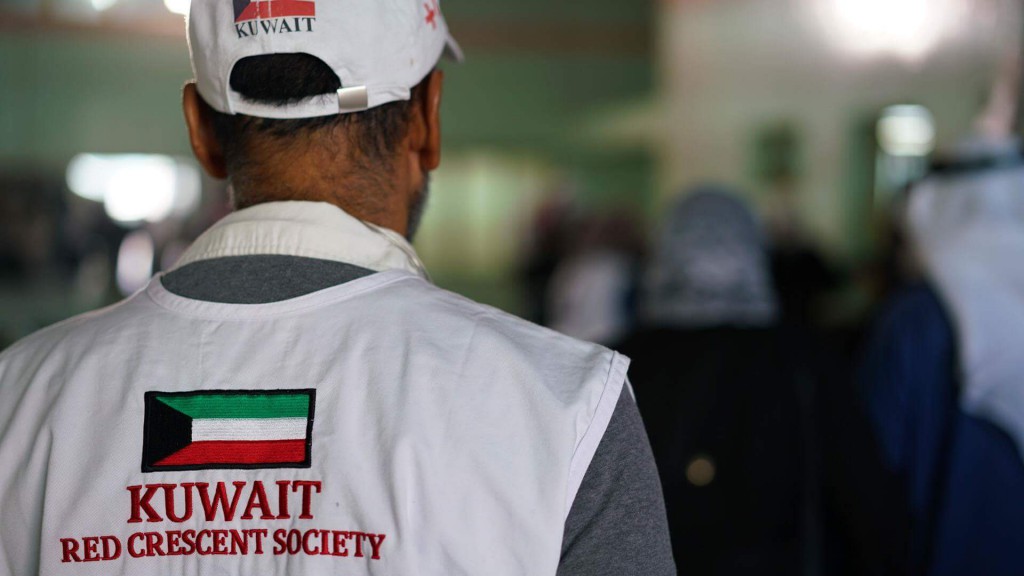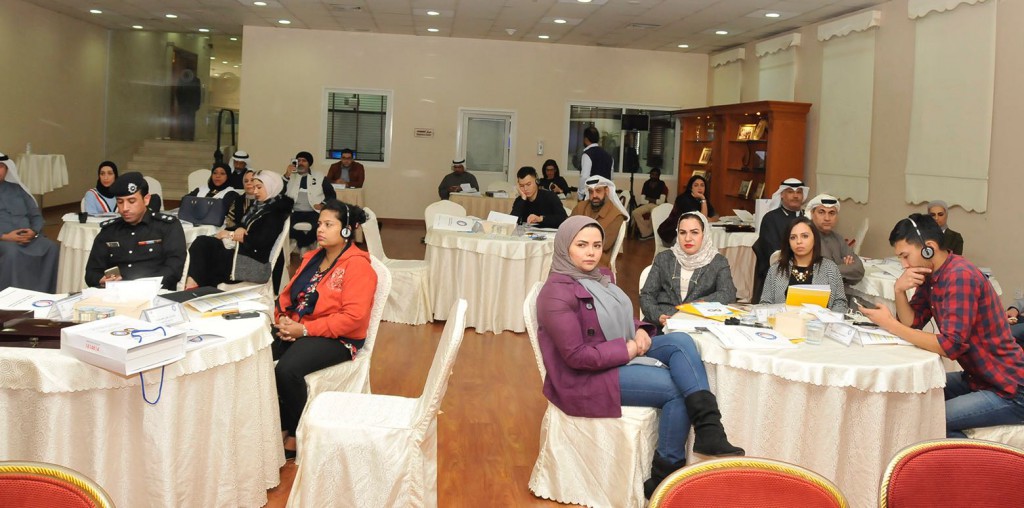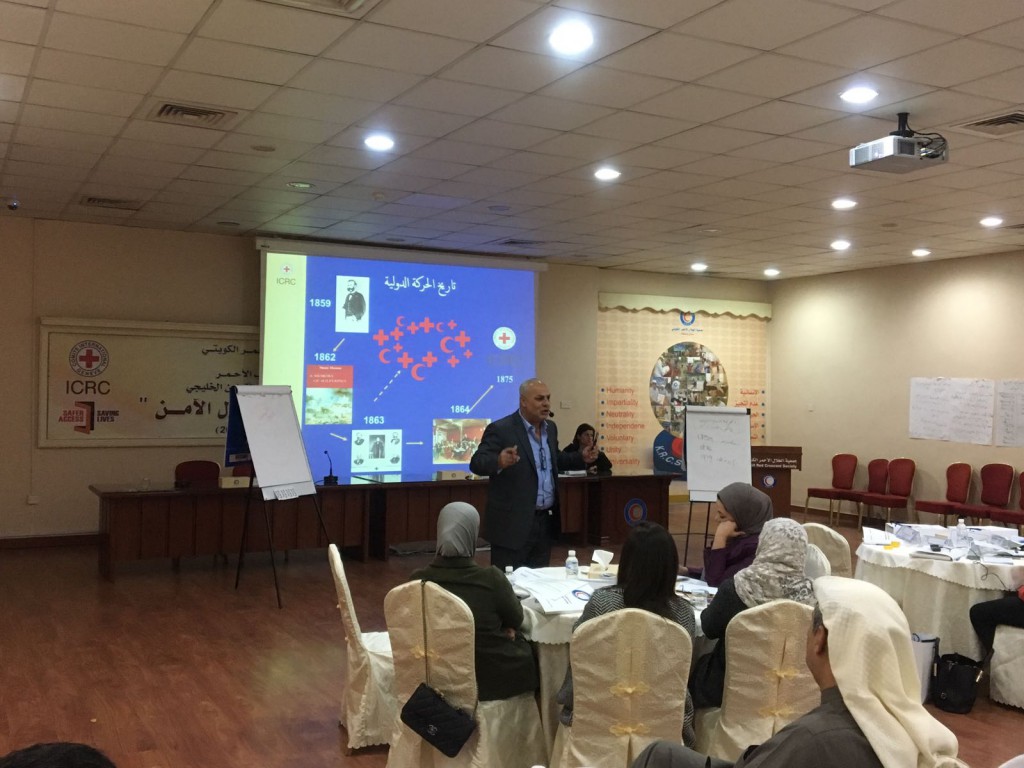
As part of its ongoing efforts to strengthen capacity in terms of disaster management and relief operations, the Kuwait Red Crescent Society (KRCS) organized a three-day Safer Access training workshop, together with the ICRC regional delegation in Kuwait. The workshop, which took place from 11 to 13 December 2017, was attended by 34 staff-members and volunteers, as well as observers from The Sri Lanka Red Cross Society and the Red Crescent Society of Kyrgyzstan. Representatives of the Ministry of the Interior, the Kuwait News Agency (KUNA), Kuwait Television and the Gulf Cooperation Council Emergency Management Center were also invited to attend.
The aims of the session were to raise awareness and explore scenarios of emergencies the KRCS might face. To ensure that all participants understood the concept of the Safer Access Framework and its components, a ‘refresher’ was provided, which included questions and answers, as well as exchanges by participants of experiences gained on their overseas missions. The role of communication in improving safety and security in the field was another of the main topics covered during the training. The participants also learned about international humanitarian law (IHL), the Movement components and the importance of proper use of the emblem.
The KRCS’ disaster management department commented: “The scenarios played a greater role in bringing concrete examples of the challenges that could face our staff and volunteers in the field. They have learnt how to better protect their lives and the lives of those they are helping. Due to the importance of such training, the KRCS would like to continue its collaboration with the ICRC in organizing an advanced regional SAF workshop for the five National Societies of the Gulf Cooperation Council.”