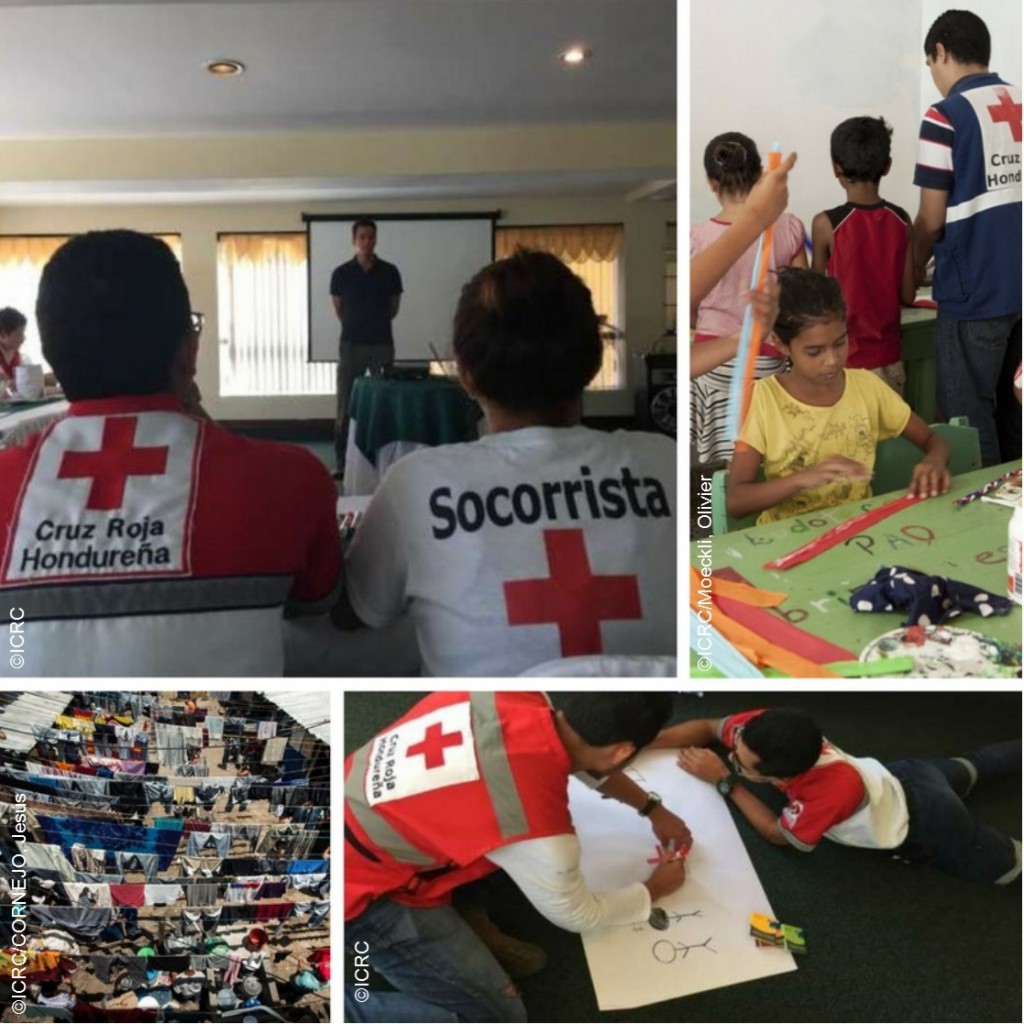
The high level of violence in Honduras in recent years has taken a heavy toll on society. In some regions of the country, the violence has had a substantial impact on the National Society and the services it provides to the various communities. The current socio-political context and upcoming presidential elections in November are complicating the situation further.
Consequently, the Honduran Red Cross Society (HRC) has had to adapt its way of working. Traditionally focused on disaster response, the HRC is now encouraging its branches to develop an election preparedness plan. Movement partners present in the country were invited to participate in the planning process, which was supported by both the Federation and the ICRC.
Dr Arnaldo Ponce, HRC director-general, commented: “The Honduran Red Cross emphasizes the importance of implementing legal, operational and administrative guidelines on reducing risk during the election process. These guidelines were created according to our Fundamental Principles and within the Safer Access Framework, the objectives of which are to safeguard the integrity of the National Society, protect our personnel, reduce risks during this event and thus ensure the continuity of our services to the Honduran population.”
This election-preparedness planning is part of a wider commitment to strengthening acceptance of, access by and the security of the National Society, following the tragic loss of a HRC colleague in 2016. The HRC developed its own customized SAF guide, which focuses on the eight elements of the Framework and their application. The guide, which is based on a Mexican Red Cross manual, also highlights safe behaviours for staff in relation to specific activities (disaster, pre-hospital care, elections and community projects on urban violence). In developing this guide, the HRC also worked on context and risk assessment, and established innovative institutional rules and procedures. With the support of Movement partners, it was able to strengthen its understanding of how to assess context and risk. In addition, Safer Access training was provided to branch staff and volunteers.